
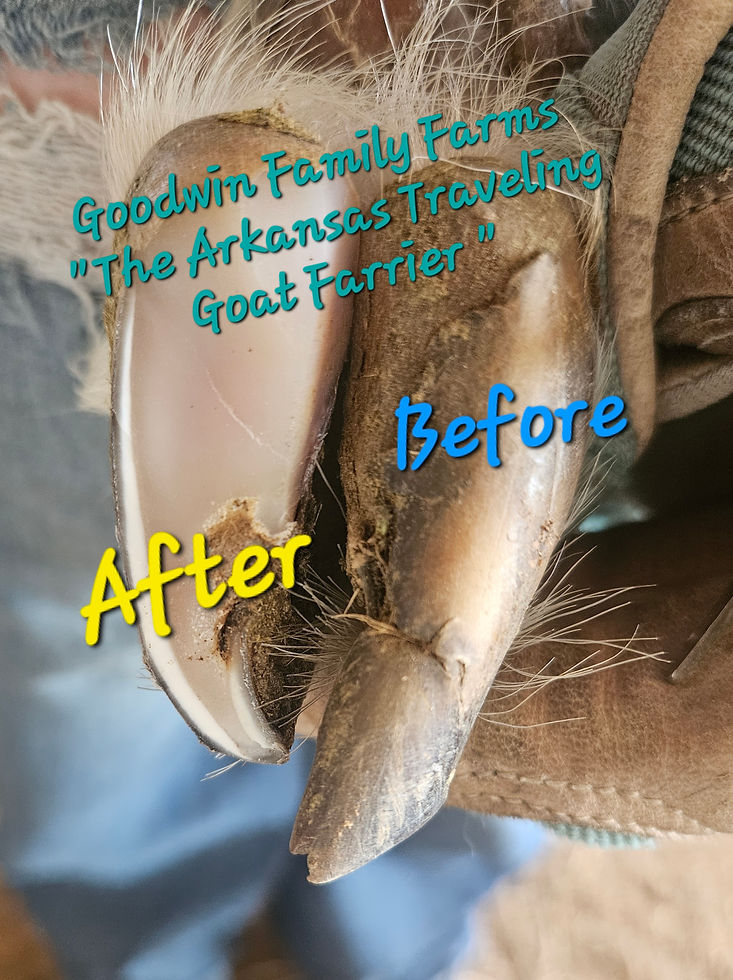
The Importance of Regular Hoof Care in Goats

Hoof care is one of the most important, and often overlooked, aspects of goat management. While many goat owners know that trimming is necessary, it’s easy to underestimate just how much neglected hooves can affect the overall health, comfort, and productivity of your herd.
Can You Fix Overgrown Hooves in One Trim?
Yes — in most cases, even severely overgrown hooves can be corrected in a single trimming session. A skilled farrier can reshape the hoof to restore balance and function quickly.
But here’s the catch: if you don’t keep up with regular trimming, those hooves will grow right back into unhealthy shapes, putting your goats at risk again.
Why Long Hooves Are a Problem
When hooves grow too long:
Joint Stress – The angle of the leg changes, putting unnatural pressure on the joints and tendons. Over time, this leads to soreness and lameness.
Hoof Rot Risk – Overgrown hooves can trap dirt, manure, and moisture, creating the perfect environment for bacterial or fungal infections.
Reduced Mobility – Goats with painful feet won’t walk as much, which can reduce forage intake, breeding activity, and milk production.
How Often Should You Trim?
Every goat is different, but a good rule of thumb is to trim hooves every 4–8 weeks. Goats living on rocky terrain may need less frequent trimming because the rough ground naturally wears hooves down. Goats kept on soft bedding or pasture usually need more frequent care.
Signs It’s Time for a Trim
Toes curling outward or upward
Hooves that spread wider than normal
Goats limping or walking unevenly
Packed dirt and debris in the hoof wall
The Bottom Line
While one good trim can get overgrown hooves back under control, consistency is what keeps your goats sound, comfortable, and productive. Think of hoof trimming as preventative medicine for your herd — a small effort with a huge impact on long-term health.
🐐 Healthy hooves = happy goats!


Comments